“Rethinking I-81″ Study Report Released

August 5, 2009

Anticipating the I-81 Challenge

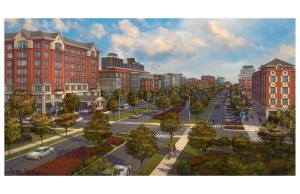
The Onondaga Citizens League issued its “Rethinking I-81″ Study Report with the goal that the community meet the I-81 challenge with a vision that is not mired in the past, but that clearly anticipates the needs of tomorrow.

 almond rendering with skyline

If your group would like a presentation on the study, contact ocl@syr.edu.


“Rethinking I-81″: OCL’s Study Blog

June 4, 2009

Making Streets Behave

New York City has issued its first street design manual, in an effort to make streets more environmentally friendly, and more amenable to bicyclists and pedestrians.  Urban planners see the document as a blueprint for designing the infrastructure for a 21st century city – one that thinks about streets as “…not just thoroughfares for cars, but as public spaces incorporating safety, aesthetics, environmental and community concerns.”  The guidelines help developers, both public and private, know what is expected of them throughout the five boroughs.

Here is what the manual says about itself:  The Manual builds on the experience of innovation in street design, materials and lighting that has developed around the world, emphasizing a balanced approach that gives equal weight to transportation, community and environmental goals. It is designed to be a flexible document that will change and grow, incorporating new treatments as appropriate after testing. The use and continued development of the Street Design Manual will assure that New York City remains a leading innovator in the public realm as it becomes a greater, greener city.


“Rethinking I-81″: OCL’s Study Blog

May 27, 2009

No ‘Carmageddon’ in Times Square

In a move to create a smoother traffic flow and more pedestrian-friendly environment, the NYC Department of Transportation shut down parts of Times Square to traffic.  On Tuesday, two days after Broadway was closed to traffic between 42nd and 47th Streets, cars, trucks, taxis and other vehicles still flowed as usual on Seventh Avenue.  The city closed sections of Broadway on Sunday, creating a pedestrian mall that extends to Herald Square.  

The bottlenecks and ‘Carmageddon’ that were predicted failed to materialize, not even on Tuesday, the first workday without cars.   Even 48th Street, “where cars now have their last chance to jog over to Seventh Avenue before reaching Times Square” …. “appeared largely trouble-free”.   (While midtown workers and pedestrians are pleased, delivery truck drivers are not happy with the experiment that requires them to park farther from their destination).

The experiment is part of the plan of Mayor Michael Bloomberg and his transportation commissioner to ease dangerous traffic congestion in the area. Whether the Mayor decides to suspend the traffic rerouting or to continue or even extend it farther along Broadway, for now it is another example of the adaptability of drivers and the power of the street grid to absorb traffic.


“Rethinking I-81″: OCL’s Study Blog

May 20, 2009

Stent (or Dagger?) in the Heart of Town: Urban Freeways in Syracuse, 1944-1967

The 1961 Decisions in Syracuse, by SU political scientists Guthrie Birkhead, Roscoe Martin, and others, explored a series of case studies of metropolitan action in Syracuse in the Post–World War II era. The study focused on public decision-making and the relative influence of various interest groups in the power structure at a time of emerging demographic change and suburbanization.  The case studies are fascinating glimpses at how important metropolitan issues, from sewage treatment and water district  to government reorganization and real estate development were approached in a regional context. 

Although it occurred in the same time period, the I-81 construction was not a subject of the book. Creation of the highway system in and around Syracuse was much less a local, or metropolitan, process than a process in which federal and state plans, and dollars, determined transportation developments.  The recent study, Stent (or Dagger?) in the Heart of Town: Urban Freeways in Syracuse, 1944-1967, published in the May 2009 issue of the Journal of Planning History, takes a look at decision-making on the urban freeways in Syracuse. 

Author Joseph F. C. Di Mento, a professor of Law and of Planning Policy and Design at the University of California Irvine, concludes that the timing of transportation decisions in Syracuse was important.  Before the evolution of environmental law, and at a time when the urban renewal goals of “slum clearance” and redevelopment converged with the funding opportunities of the federal highway fund, the fiscally conservative city administration deferred to state highway plans.  A relatively weak city planning function and a “strong engineering-driven state highway bureaucracy and gubernatorial positions” influencing choices Syracuse made, “ …led to an outcome different from what city fathers and officials had envisioned…”.

The approaching need to reconstruct parts of the freeway through the city gives Syracuse an opportunity to develop a new vision for the community.


“Rethinking I-81″ – OCL’s Study Blog

May 7, 2009

Building Infrastructure-Building Experience

This week’s Citiwire.net columns by Neal Peirce and Alex Marshall focus on the promise of high speed rail as the “New Deal” for transportation.  “My high-speed rail proposal,” President Obama is quoted as saying, “will lead to innovations that change the way we travel in America. We must start developing clean, energy-efficient transportation that will define our regions for centuries to come.”

Certainly, the costs of the projects will be challenging, but more than that, “America’s become tortuously slow, way behind world standards, in building any kind of infrastructure,” according to Peirce. “Some states spend years just adding HOV or exclusive bus lanes to existing highways.”

Marshall reports that former Massachusetts governor Michael Dukakis, a big rail booster, says that over-budget, drawn-out infrastructure construction has become the norm.  State and local governments tolerate huge multi-year delays.  ”The cure, says Dukakis is competence: to learn to undertake great projects again, and to value quality government.”

The I-81 corridor project, whatever form it takes, will be of a scale not experienced in Syracuse since the viaducts were originally planned and constructed.  Our elected officials and transportation authorities will have to exhibit the scale of leadership and guidance that a project of its magnitude requires.


“Rethinking I-81: OCL’s Study Blog

April 19, 2009


John O. Norquist, Change Agent

April 19, 2009

One of the panelists at this week’s annual meeting of the Metropolitan Development Association is John O. Norquist, a former lathe operator and community organizer who later became a state legislator and then mayor.  As mayor of Milwaukee from 1988-2004, Norquist oversaw a revision of the city’s zoning code and reoriented development around walkable streets and public amenities such as the city’s 3.1-mile Riverwalk.   He also earned widespread recognition for championing the removal of a .8 mile stretch of the elevated Park East freeway, clearing the way for an anticipated $250 million in infill development in the heart of Milwaukee.

As current president and CEO of the Congress for the New Urbanism, a national organization promoting walkable, neighborhood-based development as an alternative to sprawl, Norquist continues the highway to boulevard campaign, believing that urban boulevards offer an attractive option for cities with aging highway infrastructure.  Cities like Portland, San Francisco, New York, and Milwaukee have found that removal of outdated elevated freeways – major physical and psychological barriers – stimulates investment and new development in the surrounding property.

A close examination of the Milwaukee experience is instructive for Central New York as we plan for the replacement of the deteriorated I-81 viaduct through Syracuse.


“Rethinking I-81″: OCL’s Study Blog

April 6, 2009

I-81 FINDINGS: PHYSICAL CONDITIONS

The Onondaga Citizens League “Rethinking I-81” Study Committee has studied the history and the physical condition of the I-81 corridor, reviewed access issues, and examined cases of freeway removals in American cities. The study report, including the committee’s findings and recommendations, will be issued later this spring. In considering the future of I-81 in Syracuse, the Committee found several factors concerning the elevated portion of I-81 important to an understanding of the project.

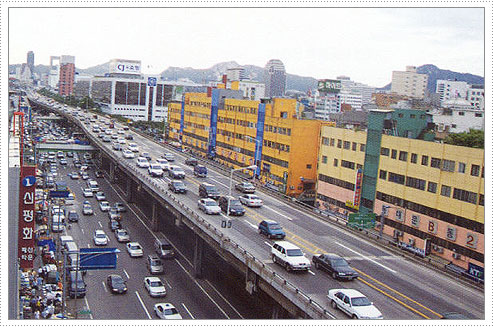
• Due to age and structural deterioration, the elevated portion of I-81 through Syracuse must be replaced, not simply repaired, in the near future. In its current configuration, the I-81 viaduct and ramps do not meet current design standards. The reconstruction project, whatever form it takes, will require a huge amount of public funds and a permanent reconfiguration of some traffic routes.

In its entire length, I-81 bypasses every downtown except for that of Syracuse. Syracuse is the only city in the entire 855 miles of the I-81 corridor where the highway bisects a city. Moving maximum volumes of cars as fast as possible is fine between cities, but is not good within cities, because the systems that make speed possible are bad for local businesses, neighborhoods, and economic development.

• Downtown Syracuse is the only place on I-81 where the speed limit is reduced to 45 mph. An interstate highway that serves a high proportion of local traffic, as well as regional traffic, does not serve either optimally.

• The SMTC University Hill Transportation Study (OCL blog post #4) concluded that tearing down I-81 in the Almond Street Corridor and rerouting through traffic might be feasible. The consultants recommended an in-depth study of an urban boulevard in lieu of the I-81 viaduct, with through traffic rerouted to I-481. The report predicted that a boulevard option would improve accessibility for commuters, visitors, and emergency vehicles, create better connections between downtown and University Hill, increase economic development opportunities, and improve air quality in the area.

• The I-81 corridor is a significant barrier between downtown and the economic engines on the Hill, devaluing the commercial and residential development potential of property all along the corridor. SUNY Upstate Medical University and Syracuse University are the area’s two largest employers. These growing institutions, and others in the area, need room to develop and expand and can generate residential, retail, commercial and additional institutional development. They grow best when they grow organically and are well connected not only by car and public transit, but also by foot and bicycle, and in terms of visual quality.

• The I-81 viaducts were recently put under a special on-going emergency repair contract by the New York State Department of Transportation, signaling that the aging infrastructure will require an increasing amount of unscheduled repair work. As much as any solution will cost, the financial cost, and safety considerations, of not making a timely decision could be even higher.


“Rethinking I-81″: OCL’s Study Blog

January 30, 2009

WHAT WOULD HAPPEN IF I-81 DOWNTOWN CLOSED?

When we think about engineering solutions to traffic problems, it’s useful to keep in mind that human behavior is a key variable in the equation.  Drivers adjust their behavior to the situations presented to them.  When the 1989 Loma Prieta earthquake damaged San Francisco’s Central Freeway, the destroyed northern portion of the viaduct was demolished, while the southern portion, running above Octavia Street, remained.   A city task force recommended replacing the elevated freeway with a surface boulevard that would make it easier for local traffic to access the neighborhood, but the state department of transportation decided to rebuild the deck.  When the reconstruction project began, the predicted gridlock failed to materialize; local streets handled the traffic without any major problems. With this evidence that the street grid could handle most of the traffic when the freeway was shut down, neighborhood residents ultimately were able to force a referendum that ended in removal of most of the freeway and the creation of Octavia Boulevard.

What would happen if sections of Interstate 81 through Syracuse were shut down for an extended period?  We actually have some experiences that give us an indication of how Central New Yorkers would react to a planned closure of a main route to downtown and the University Hill area.  Ten years ago, construction closed the northbound lanes of I-81 from the Brighton Avenue exit to the Harrison Street on-ramp for about three months.  When that project was complete, the southbound lanes were closed from Interstate 690 to Calthrop Avenue.  It was the first major closure since I-81 north was shut down for eight months in 1988 to repair badly deteriorated bridge decks.

For months before the shutdown, the State Department of Transportation conducted a massive campaign to inform city officials, businesses, and residents about the project and alternative routes.  The newspapers were full of warnings for weeks in advance of the construction for the estimated 30,000 drivers a day who took I-81 north through Syracuse.  In addition, plans including street sign and traffic signal changes, additional traffic police, and even a free OnTrack train between Jamesville and Armory Square were put in place to keep traffic moving.

 “Where’s the Rush?  First Day of I-81 Detour Goes Smoothly” was the headline on the May 27, 1999 Post-Standard story.    At the peak of the first rush hour affected by the northbound shutdown, “…there was virtually no traffic on the detour route where state transportation officials feared a major backup.”  Commuters found their own quickest secondary routes to use, diverting cars from the detour routes and allowing traffic to flow smoothly.

Commuters leaving downtown during the afternoon rush hour had a more difficult time after DOT shut down the I-81 connector to I-690, and the Harrison Street on-ramp was reduced to one lane.  As drivers avoided the on-ramp and learned to use alternate routes to access I-690 east, traffic eased over the following days, though backups at intersections still occurred, as drivers, particularly those heading north, headed to the Harrison Street ramp.  Deck repairs north of downtown closed lanes and slowed traffic in that area, but even those slowdowns added less than five minutes to total commute time, the DOT spokesman was quoted as saying.

The OnTrack commuter train, which offered free rides between Jamesville and Armory Square during the construction, averaged only 35 riders a day, because, it was assumed, the gridlock that was expected to cause severe traffic delays never occurred.  “Motorists and police feared gridlock would seize the city when a 2 ½ mile stretch of I-81 northbound lanes were closed in May for repairs.  But the back-ups were minor.” (The Post-Standard, August 19, 1999 pg. A1).

When DOT closed down I-81 south, including the connectors from I-690 east and west, affecting nearly 35,000 daily travelers, DOT officials were more optimistic.  In fact, the closure of I-81 south to replace expansion joints and make other repairs, generated almost no news, and apparently only minor traffic tie-ups.  Commuters seemingly adjusted their schedules or their routes through the 2 ½ months of repairs. As then assistant DOT regional director George Angeloro said during the northbound shutdown: “Traffic is like water. It seeks its own levels.”  

A temporary shutdown can give us a partial indication of what might happen if the highway were replaced with an alternative roadway.  As in other cities that have permanently eliminated a freeway, improvements to the surrounding street grid, as well as pedestrian, bicycle, and transit considerations, would be part of the mobility plan. 


Rethinking I-81: OCL’s Study Blog

December 9, 2008

SHIFTING PRIORITIES: HOW FREEWAY REMOVAL DECISIONS ARE MADE

As we saw in San Francisco’s ‘Freeway Revolt’, the city’s quality of life  and economic development priorities fired opposition to freeways and influenced decisions to reject the building of expressways through the city in the 1950’s and 60’s and their rebuilding in the 1990’s.    But citizen opposition alone is not the only influence on local transportation planning decisions. A recent examination of three cases of freeway removal in the U.S. suggests that four conditions must be met to create an environment where change will take place.

 “Shifting Urban Priorities?  Removal of Inner City Freeways in the United Statesin the 2008 issue of Transportation Research Record: Journal of the Transportation Research Board,  presents an analysis of three cases in which freeway removal was a seriously considered option – San Francisco and Milwaukee, where freeways were removed, and Washington, D.C., where the Whitehurst Freeway, which did not generate strong community support for removal, was rehabilitated.  The authors, Francesca Napolitan of Nelson/Nygaard Associates and P. Christopher Zegras of MIT, note that many of the interstate highways built after passage of the Federal-Aid Highway Act in 1956 are reaching, or have reached, the end of their useful life.  Today, the need for large public investment in rebuilding of the aging infrastructure is juxtaposed with movements toward the need for more sustainable transportation, as well as concerns about urban quality of life. 

 What are the conditions that seem to be requisite for a freeway removal decision?  The authors’ analysis concluded that first, the freeway must be considered unsafe (as in post-earthquake Central Freeway in San Francisco or aging and deteriorating Park East Freeway in Milwaukee).  Secondly, there is often some event that brings the removal alternative to the forefront, or creates a ‘window of opportunity’. The window could be the rise of a champion, such as the election of Mayor Norquist in Milwaukee, or the advancement of the idea by a successful test such as the temporary shutdown of the Central Freeway for repair, which failed to present any major traffic problems. The third consideration at play is that mobility (of vehicles) is a lower priority than other community goals such as quality of life or economic development.  In San Francisco, the residents valued quality of life over high-speed access; in Milwaukee the economic development potential of the re-knit downtown and waterfront was the higher priority than vehicle mobility. Lastly, the writers theorize that the highway removal must have a champion who is an “empowered agent of change”. That is, the “other than mobility” value must be rooted in the power of an individual, such as an influential elected official, or in a group, such as voters in the case of a referendum, or an influential neighborhood grassroots organization.

Washington D.C.’s Whitehurst Freeway was the only one of the cases studied where the decision was made to retain the existing freeway.  Several factors specific to that roadway, the surrounding neighborhood, and the political jurisdiction contributed to the decision to rehabilitate.  But the authors also note that the decision-makers and residents in that situation, which played out in the 1980’s, did not have the benefit of studying a recent, high profile precedent like  San Francisco’s Embarcadero, which had been destroyed by the 1989 earthquake and demolished two years later. 

While no two highways are alike, the authors suggest a new framework for evaluating freeway projects that recognizes a paradigm shift away from pure engineering efficiency to include other community priorities:  along with the standard “fix-it first” and rebuild options, it may be time to include a “tear-down” option when deciding what to do with aging infrastructure.


A working paper version of the published journal article can be found at: http://web.mit.edu/czegras/www/Napolitan_Zegras_FreewayRemoval_Final.pdf


Rethinking I-81: OCL’s Study Blog

November 17, 2008
San Francisco’s ‘Freeway Revolt’

The Embarcadero, the six-lane, tree-lined boulevard along the waterfront that replaced the Embarcadero Freeway in San Francisco, in many ways epitomizes the freeway-to-boulevard movement.

180px-san_francisco-embarcadero_freeway_demolition13The freeway, which separated downtown from the waterfront, was completed in 1959 as part of an intended freeway system connecting the Bay and Golden Gate Bridges.  However, San Francisco’s “Freeway Revolt” left it as a one-mile connector to the North Beach and Chinatown areas, carrying 60,000 cars a day at its peak.   The freeway was closed after being damaged in the 1989 Loma Prieta Earthquake, and demolished in 1991 over the objections of merchants in Chinatown.  Now a “complete street”, serving not just 26,000 cars a day but pedestrians, streetcar riders and other modes of traveler, the Embarcadero has made the waterfront an attractive destination for tourists and locals alike. 

Wikipedia

Since the demolition of the freeway, the area has seen restoration of the Ferry Building, establishment of new residential areas, and other redevelopment, including a flourishing Chinatown.
The Embarcadero is an impressive example of how freeway removal can have a positive impact on the visual environment, and a catalytic effect on development in the right-of way and even in nearby neighborhoods.

Although the boulevard is broad, it is designed for pedestrians, bikes, and transit riders, as well as vehicles, and has provided a connection to the waterfront and the restored Ferry Building.  And while about half the traffic on the former freeway was diverted onto alternate routes, traffic was successfully absorbed without disruption.

San Francisco’s Central Freeway removal, creating Octavia Boulevard, also illustrates how a freeway to boulevard project can transform a neighborhood.

central-freeway-14Like the Embarcadero Freeway, the Central Freeway was completed in 1959, envisioned as part of the larger freeway system stopped by a citizen-led “freeway revolt” in the 1950’s and ‘60’s.  At its peak, Central Freeway carried approximately 100,000 cars a day.  Damaged by the 1989 earthquake, a segment of the viaduct was demolished, and engineers began planning a rebuild of the remaining freeway. However, citizens and local officials began to consider alternatives; when roadwork closed a segment of the remaining viaduct for four months without causing the anticipated gridlock, a surface boulevard concept gained favor.  In 1999, residents voted for the boulevard alternative over the freeway retrofit and the freeway closed for good in 2003. 

 centraloctaviablvdatmarket1Octavia Boulevard opened in 2005 with four center lanes for through traffic, landscaped dividers, two side lanes of local traffic and two lanes of on-street parking.  The surrounding residential neighborhood has been transformed, green space added, new housing units are planned, and commercial property values in the area have increased.  While the boulevard is still heavily used as a through route, traffic in the corridor dropped by half, as some of the traffic moved to alternate routes with sufficient capacity to handle the displaced traffic, and a small percent of drivers switched to transit. 

While it was the 1989 Loma Prieta earthquake that ultimately led to the demolition of the Embarcadero and Central Freeways, it was rejection by the citizens and Board of Supervisors of the original 1955 freeway plan that kept San Francisco from becoming an automobile-oriented city in the first place.  As the city began building the Embarcadero along the waterfront, and residents could envision the effect of the full freeway construction plan on neighborhoods and businesses, a powerful opposition movement emerged.  The neighborhood quality of life and economic development priorities that fired opposition in the 1950 and 60’s, came into play again in the decisions in the 1990’s to reject the rebuilding of high-speed expressways through the city.